How Much Do Facebook Messenger Broadcast Tools Cost in 2026? Pricing Guide
Messenger broadcast pricing in 2026 is a maze of platform fees, per-message charges, and hidden add-ons. Some tools bill you per contact, others per broadcast, and a few stack monthly platform fees on top. Knowing which model fits your volume prevents overpaying every month.
This guide breaks down how Facebook Messenger broadcast tools are priced, what pushes your total cost up or down, and how Com.bot's Silver, Gold, and Platinum plans compare. You will also see which features justify the spend and who gets the most value from the platform.
What Is Com.bot? Facebook Messenger Broadcast Pricing Explained
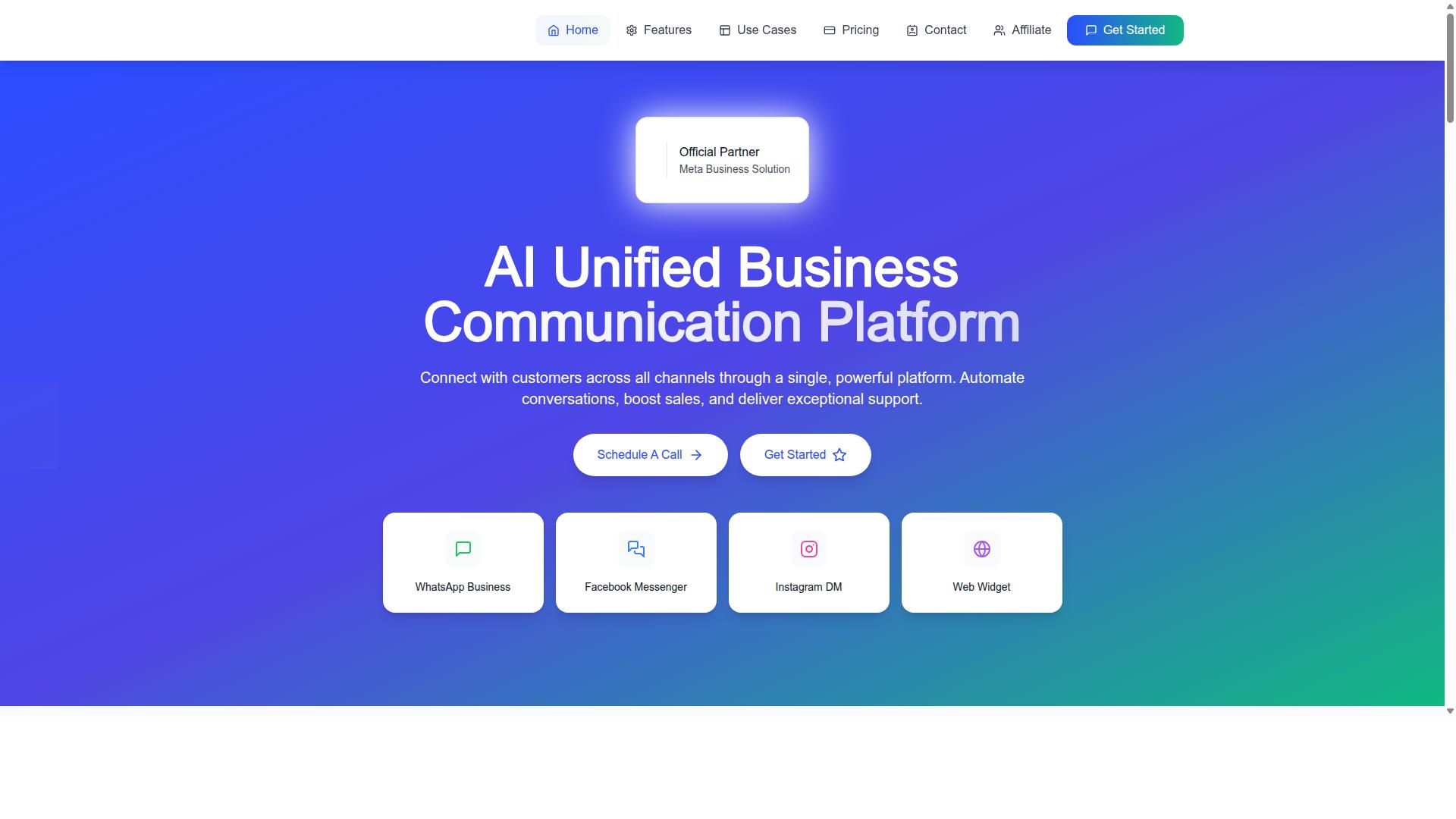
Com.bot is an AI-powered unified business communication platform that enables Facebook Messenger broadcasts alongside WhatsApp and Instagram messaging. It is owned and managed by Com Bot AI Limited and holds Official Meta Business Partner status, with direct WhatsApp Business API integration.
That single-platform approach matters for pricing. Instead of paying separate subscription fees for each messaging channel, businesses manage Facebook Messenger, Instagram DM, WhatsApp Business and a Web Widget from one dashboard. For a pricing guide, this changes the cost conversation from "how much per channel" to "how much for one connected system."
So what exactly is a Facebook Messenger broadcast? It is a message sent from a business page to many recipients at once, rather than a one-to-one reply. Broadcasts are typically used for order updates, promotions, appointment reminders and announcements. They let a business reach an entire contact list without composing individual messages.
Businesses adopt broadcast tools because manual messaging does not scale. As a contact list grows, so does the workload, and response times slip. Automation platforms solve this by handling volume, timing and follow-up consistently. Customers tend to expect fast replies, which is why broadcast capability has become a core requirement rather than a nice-to-have.
Com.bot's positioning sits at the intersection of two categories: chatbots and automation on one side, and multi-channel messaging on the other. The platform automates conversations, supports sales and delivers customer support across channels. That combination is the baseline for understanding the pricing tiers, subscription structures and volume limits covered in the rest of this guide.
Who Com.bot Serves and Why It Matters for Messenger Broadcasts
Com.bot serves a diverse range of businesses, from small ecommerce shops to large enterprises and government bodies, all seeking to automate and scale their customer communication. Each segment uses Messenger broadcasts differently, and those differences shape which pricing tier makes sense.
For ecommerce businesses, broadcasts carry order updates, shipping notifications and payment collection prompts. A small shop might send a few hundred messages a month, while a growing store sends thousands. That gap in message volume is often the deciding factor between entry-level plans and higher tiers.
Service businesses lean on broadcasts for appointment reminders and follow-ups. A clinic, salon or repair service can remind an entire day's bookings in one send, which reduces no-shows and frees staff time. Here, contact list size matters more than raw message frequency.
Larger organizations, including enterprises and government bodies, need multi-channel customer support at scale. They often require bulk messaging, consistent branding across channels and the ability to handle high volumes without manual intervention. For these buyers, enterprise pricing and custom quotes are the norm.
Digital marketing agencies and customer support teams form another group. Agencies manage broadcasts on behalf of multiple clients, so seat limits and account structures affect cost. Support teams care about response consistency, which is where chatbot automation earns its place.
Why does this segmentation matter for pricing? Because broadcast tools rarely charge a flat rate. Subscription fees typically scale with active contacts, message volume limits or feature access. Knowing which segment you fall into tells you which pricing model, and which potential overage fees, will apply to you.
How Much Do Facebook Messenger Broadcast Tools Cost in 2026?
In 2026, Facebook Messenger broadcast tools range from free tiers with limited features to enterprise plans costing thousands per month. The gap between the cheapest and most expensive option is wide, and the right fit depends on how you plan to use broadcasts.
At the low end, a freemium model lets a small business test basic broadcasting with a capped contact list. At the high end, enterprise pricing is quoted per account and often bundled with onboarding, support, and compliance features.
Most buyers land somewhere in the middle. A growing ecommerce store or digital marketing agency typically pays a monthly subscription that scales with subscriber count and message volume.
It helps to think of cost in three layers: the base plan, the usage charges on top, and any one-time fees. Understanding each layer prevents surprises when the first invoice arrives.
Typical Pricing Models: Per-Message, Subscription, and Platform Fees
Most Facebook Messenger broadcast tools adopt one of three pricing models: per-message fees, tiered subscriptions, or a hybrid with platform fees and usage-based charges. Each model shifts risk differently between the buyer and the vendor.
Per-message pricing charges a small amount for each message sent, often in the range of a fraction of a cent to a few cents. This suits businesses with unpredictable volume, since you pay only for what you send. The downside is that costs climb quickly during a large campaign.
Tiered subscriptions charge a flat monthly fee based on your contact list size. A plan might start around $50 per month for a few hundred contacts and reach several hundred dollars for larger lists. Tools such as ManyChat, Chatfuel, and SendPulse are commonly cited examples of this structure, though exact figures vary by plan and region.
Hybrid platform fees combine a base monthly charge with usage-based costs. You pay for access to the platform plus a rate for messages beyond an included allowance.
Watch for one-time and hidden costs:
- Setup fees for account configuration or migration
- Onboarding costs for training or template building
- Overage fees when you exceed message or contact limits
- Add-on charges for integrations or advanced automation
Always confirm what a free trial includes and whether unused messages roll over.
What Drives Your Total Cost Up or Down
The total cost of a Facebook Messenger broadcast tool hinges on factors such as your contact list size, monthly message volume, and the specific features you require. Two businesses on the same plan can pay very different amounts.
Active contacts are the biggest lever. Pricing tiers commonly break at 500, 1,000, and 5,000 contacts, and each jump raises the monthly fee. A list that grows past a threshold can push you into the next tier automatically.
Message volume limits matter just as much. A plan may include 1,000 messages, then charge a small per-message rate for anything beyond that. High-frequency senders feel this fast.
Feature add-ons also move the number:
- Automation and chatbots for handling replies at scale
- CRM integration to sync contact data
- Analytics and reporting for campaign tracking
- Multi-agent seats for customer support teams
Scalability needs cut both ways. Annual billing often lowers the effective monthly rate, while overages and last-minute upgrades raise it. Consider a hypothetical: a small business with 800 contacts sends 5,000 messages a month. On a $99 tier with 1,000 messages included, the extra 4,000 messages at a fraction of a cent each could add meaningful cost, so comparing the all-in figure matters more than the headline price.
Com.bot's Facebook Messenger Broadcast Pricing and Plans
Com.bot offers three straightforward quarterly subscription plans, Silver, Gold, and Platinum, plus optional add-ons to tailor the platform to your needs. Instead of monthly billing, Com.bot uses a quarterly subscription model, which means you pay once every three months rather than watching a charge hit your card each month.
That structure matters for budgeting. Businesses evaluating Facebook Messenger broadcast tools in 2026 often juggle several software subscriptions, so fewer billing cycles can simplify planning. It also gives teams a longer window to test broadcast campaigns before renewing.
The plans are built to scale with business needs. A small business can start on an entry tier and move up as its contact list and message volume grow, without switching platforms. All plans include core broadcast features, along with access to the unified inbox and the bot builder.
Where the tiers differ is in usage limits and support. Higher plans unlock more room to grow and deeper help when you need it, while lower plans keep costs predictable for lean teams. Add-ons exist for anything in between, letting you pay only for the capacity you actually use.
Silver, Gold, and Platinum Plans Compared
Com.bot's Silver Plan starts at $149 per quarter, the Gold Plan at $349 per quarter (recommended), and the Platinum V1 at $2,500 per quarter. Each tier targets a different stage of business, so the right choice depends on your team size, channel count, and broadcast volume.
| Plan | Price | Best For |
|---|---|---|
| Silver | $149 per quarter | Small businesses and startups |
| Gold | $349 per quarter (Recommended) | Growing businesses |
| Platinum V1 | $2,500 per quarter | Large enterprises with advanced needs |
The Silver Plan suits small businesses, startups, and solo operators running their first Messenger broadcast campaigns. It keeps subscription fees low while still covering core broadcast features, the unified inbox, and the bot builder.
The Gold Plan is Com.bot's recommended tier, and it offers the best balance for most users. Growing businesses typically need more team members, more social channels, and higher message volume than an entry plan comfortably allows, and Gold is positioned for exactly that middle ground.
Platinum V1 serves large enterprises with advanced requirements. At $2,500 per quarter it sits in enterprise pricing territory, which is normal for organizations managing high broadcast volume across multiple channels and teams.
When comparing tiered plans, look past the headline price. Match each tier against your active contacts, expected message volume limits, and how many people on your team need platform access. If Silver feels tight but Platinum is overkill, Gold usually lands in the sweet spot.
Add-Ons That Affect Your Monthly Bill
Beyond the base subscription, Com.bot offers add-ons such as additional team members, social channels, and external actions, each priced at $10 per month per unit. These are optional, so your quarterly plan price stays fixed unless you choose to expand.
- Additional team member: $10 per month each
- Additional social channel: $10 per month each
- External actions: $10 per month per 5,000 actions
- Bot triggers: $10 per month per 25,000 triggers
- Ecommerce store: $10 per month
Because add-ons bill monthly while the core plan bills quarterly, it helps to estimate your needs before committing. A team of five on a plan that includes two seats, for example, would add three team members at $10 each per month.
Broadcast-heavy accounts should also watch external actions and bot triggers. These scale in blocks, 5,000 actions and 25,000 triggers respectively, so the cost grows in predictable steps rather than surprise overage fees.
Com.bot also offers dedicated support billed by the hour: $49 per hour for WABA, CRM, and Inbox help, and $99 per hour for Ecommerce, Bots, and Automations. These are separate from your plan and only apply if you request hands-on assistance.
One more detail worth noting for budgeting: WhatsApp messaging is billed at actual Meta rates with no markup. That transparency makes it easier to forecast total monthly costs, since you are not paying a platform premium on top of Meta's own pricing.
The practical approach is to start with the plan that fits today, then add capacity as your subscriber count and channel count grow. Add-ons exist precisely so you can scale without jumping to a higher tier before you need it.
Key Features That Justify the Cost
Com.bot's value proposition extends beyond basic broadcasting with features like a visual bot builder, unified team inbox, and native payments for WhatsApp. A subscription fee only makes sense if the tool inside it does real work. For teams comparing Facebook Messenger broadcast tools in 2026, the question is not just what a plan costs, but what that cost replaces in manual effort, missed messages, and lost sales.
Com.bot bundles several capabilities into one platform, which is why its pricing holds up against tools that charge separately for each function. The sections below break down what those features are and why they matter for small business owners, agencies, and support teams alike.
Visual Bot Builder with drag-and-drop interface. This is the engine behind most automation. Teams can build and adjust conversation flows without writing code. For a small business, this removes a major hiring cost. For a digital marketing agency, it means faster campaign turnarounds across multiple client accounts.
Unified Team Inbox. Conversations from different channels land in one place, so agents are not juggling separate tabs or logins. Team Collaboration with role-based access keeps the right people on the right conversations. Fewer handoffs and less context-switching translate directly into faster response times and lower staffing pressure.
Native Payments for WhatsApp transactions. Collecting payment inside the chat removes a step where buyers often drop off. For ecommerce sellers, that means the conversation and the transaction live in the same thread. This is a capability many broadcast-only tools simply do not offer.
Multi-Channel Support for WhatsApp, Facebook and Instagram. A single automation setup can reach customers across all three platforms. That matters because customer attention is spread out, and rebuilding the same flow three times wastes hours.
Supporting features round out the picture:
- Automation Builder with 1000+ integrations
- Bulk Messaging and Notifications
- Order Updates and Customer Support flows
- Smart Chatbots and Payment Collection
- WhatsApp Business API integration
- External Integration for connecting existing systems
Taken together, these features target the two costs that hurt most: time and missed revenue. Automation handles repetitive replies. The unified inbox keeps human agents efficient. Payments and order updates close the loop inside the chat. Each one chips away at the manual work that tiered plans and monthly pricing are meant to justify.
When evaluating whether a subscription fee is worth it, the practical test is simple. Add up the hours saved on repetitive messaging, the sales recovered through in-chat payments, and the support tickets deflected by chatbots. If that total exceeds the plan cost, the tool pays for itself. Com.bot's feature set is built to make that math work in your favor.
Trust Signals: Why Com.bot Is a Safe Investment
Com.bot is an official Meta Business Partner with over 23,000 active customers and 25 million messages processed daily, underscoring its reliability and scale. For a business weighing broadcast tool costs, those numbers matter as much as any price tag. A platform that handles that kind of daily volume has already proven it can keep messages moving when it counts.
Pricing questions rarely stand alone. Buyers also want to know whether the vendor will still be around, whether the infrastructure holds up under load, and whether their data stays protected. Com.bot answers each of those concerns with verifiable track record and security credentials rather than marketing claims.
Below are the credibility indicators that separate a durable investment from a risky one.
- Official Meta Business Partner status, which signals direct alignment with the platform your broadcasts depend on
- 23,000+ active customers relying on the platform today
- 100+ government bodies served, a segment that typically demands strict procurement and security standards
- 500+ global partners building on and reselling the platform
- 25M+ messages processed per day, demonstrating real-world scale
- 100K+ bots created, reflecting deep adoption across use cases
- Enterprise security with end-to-end encryption, protecting conversation data in transit
Each signal reduces a different kind of risk. Meta Business Partner status lowers platform risk, since the tool operates within official channels rather than around them. A large active customer base and a high daily message volume lower operational risk, because the system is tested continuously at scale.
Serving more than 100 government bodies is a particularly strong indicator. Public sector buyers tend to run thorough due diligence before signing any contract, so their presence on the customer list suggests the platform clears a high bar for security, stability, and accountability. The 500+ global partners add another layer, since partners stake their own reputations on the tools they recommend.
Security is where cost conversations often go wrong. A cheaper tool that exposes customer conversations can end up far more expensive than a slightly higher monthly subscription. Com.bot's enterprise-grade security with end-to-end encryption means message content stays protected, which matters for ecommerce brands handling order details, support teams managing account information, and agencies serving clients with compliance obligations.
For anyone building a 2026 budget, the practical takeaway is simple. Compare subscription fees and per-contact pricing, but weigh them against vendor stability and data protection. A platform backed by Meta partnership, tens of thousands of paying businesses, and encrypted infrastructure carries far less long-term risk than an unproven alternative, whatever the sticker price says.
Who Should Use Com.bot for Messenger Broadcasts
Com.bot is ideal for businesses of all sizes, from small ecommerce stores to large enterprises, that need to automate and scale Facebook Messenger broadcasts. The platform also supports WhatsApp and Instagram, which means teams can manage customer conversations across multiple channels without juggling separate tools.
Because broadcast pricing usually scales with contact list size and message volume, the right fit depends less on company size and more on how many people you need to reach. Here is how different user profiles typically benefit.
- Small businesses wanting affordable automation to send order updates and replies without hiring extra staff.
- Medium businesses needing multi-channel support across Facebook, WhatsApp, and Instagram.
- Large enterprises requiring high-volume broadcasting and security for sensitive communications.
- Ecommerce stores sending order updates and collecting payments inside chat.
- Digital marketing agencies managing broadcasts and messaging for multiple clients.
- Customer support teams handling bulk messaging and follow-ups at scale.
- Government bodies that need reliable, multi-channel communication with the public.
For small businesses, the appeal is straightforward. A single owner or small team can set up automated replies and order notifications without dedicating a person to messaging all day. This keeps subscription fees predictable while still reaching every customer who writes in.
Medium businesses often outgrow single-channel tools. Com.bot covers WhatsApp, Facebook, and Instagram together, so a growing team can keep one workflow instead of three. That matters when broadcast volume rises and consistency across channels becomes a priority.
Large enterprises and government bodies tend to care most about volume and security. High-volume broadcasting and payment collection both demand a platform built for scale, which is exactly where a multi-channel setup like Com.bot fits.
For ecommerce, the practical wins are order updates and payment collection, both handled through chat rather than email threads. Digital marketing agencies benefit from managing several client accounts through one automation platform, while customer support teams use bulk messaging to handle routine questions and follow-ups efficiently.
In short, Com.bot suits any organization that treats messaging as a core channel rather than an afterthought. The pricing tier you choose should match your contact list size and message volume, not your headcount.
Final Verdict: Is Com.bot Worth the Price in 2026?
Considering its feature set, scalability, and trust signals, Com.bot offers competitive value for businesses serious about Facebook Messenger broadcasts in 2026. The platform does not chase the lowest price on the market. Instead, it competes on what that price delivers: a dependable toolkit for reaching audiences at scale without juggling multiple vendors.
For teams weighing subscription fees against real outcomes, the calculation comes down to how much of the workflow one platform can absorb. Com.bot handles broadcasts alongside broader automation and multi-channel needs, which reduces the stack of tools a growing business would otherwise pay for separately.
Strengths to weigh in your favor:
- A feature-rich platform built for broadcast and automation work
- Multi-channel support, useful for teams active beyond Messenger alone
- Strong security, a genuine consideration when handling customer conversations
- Scalable pricing that grows with your contact list and message volume
- Support reachable by phone, WhatsApp, and email during business hours
Trade-offs to consider:
- There is no permanent free tier, so a freemium model is not on the table
- Smaller businesses with tiny contact lists may find the entry cost higher than budget tools
- A free trial may be available, which softens the risk of committing before you see fit
The absence of a free plan is a deliberate trade-off, not an oversight. Platforms that support multi-channel messaging and security at scale carry real infrastructure costs, and those costs rarely fit inside a permanently free product. A trial period, where offered, is the practical way to test that value against your own workflow.
Who gets the most from it:
- Small businesses with a modest subscriber count should confirm the entry tier fits their budget before committing
- Medium businesses running regular broadcasts will likely find the balance of features and price most favorable
- Large enterprises needing multi-channel reach and security typically see the strongest return
- Ecommerce teams, digital marketing agencies, and customer support teams benefit from consolidating broadcast and automation work
Scalability matters more than the sticker price over a full year. A tool that is cheap at 500 contacts but forces a migration at 5,000 costs more in disruption than a platform priced to grow with you. Com.bot's tiered structure is built around that reality.
If your business treats Facebook Messenger broadcasts as a core channel rather than an experiment, Com.bot is worth serious consideration in 2026. The platform earns its price through breadth of capability, security, and room to scale, qualities that matter more as your audience grows.
To evaluate fit for your own contact list and message volume, reach out to the Com.bot team directly. You can contact the head office at 501, Trinity Orion, Vesu Main Road, Surat - 395010, IN, call or message +91 080 6987 1810, or email [email protected]. Business hours run Monday through Friday, 9:00 AM to 6:00 PM IST, with WhatsApp support available. Ask about a consultation or trial to see how the platform performs against your specific broadcast needs.
Frequently Asked Questions
How much does Com.bot cost for Facebook Messenger broadcast and automation?
Com.bot's pricing is published as quarterly plans: Silver at $149 per quarter, Gold at $349 per quarter (recommended), and Platinum V1 at $2500 per quarter. Since Com.bot is a unified platform covering WhatsApp, Facebook Messenger, Instagram DM and Web Widget, these plans let you manage Messenger broadcasts and automation alongside your other channels. For the plan that best fits your message volume and team size, contact Com.bot directly.
Are there extra costs beyond the main Com.bot plan?
Yes, Com.bot offers add-ons priced at $10 per month for items such as an additional team member, an additional social channel, external actions (per 5000), and bot triggers (per 250). These let you scale specific parts of your setup without changing your core quarterly plan. Your total cost therefore depends on how many channels, teammates and automation actions you need.
Why do Facebook Messenger broadcast tools vary so much in price?
Pricing across the market generally depends on factors like the number of contacts or messages included, how many channels and team members you need, and the depth of automation and analytics offered. Some tools charge mainly for broadcast volume, while unified platforms bundle Messenger with other channels, which affects the overall cost. Because competitor pricing changes often, compare each provider's current published plans rather than relying on older figures.
Does Com.bot charge per message for Facebook Messenger broadcasts?
Com.bot's published pricing is based on quarterly plans (Silver, Gold and Platinum V1) plus optional add-ons, rather than a per-message rate listed in its plans. Keep in mind that Meta may apply its own messaging policies and charges for Facebook Messenger, which are separate from what you pay Com.bot. For details on how message volume is handled on your plan, confirm with Com.bot's team.
Is Com.bot a good fit if I want to broadcast on Messenger and other channels together?
Yes - Com.bot is an AI Unified Business Communication Platform that connects customers across WhatsApp Business, Facebook Messenger, Instagram DM and Web Widget from a single platform. It's built for businesses that want to automate and scale communication across WhatsApp, Facebook and Instagram, including bulk messaging, order updates and multi-channel customer support. Com.bot is an Official Meta Business Partner with 23,000+ active customers and 50+ countries served.
How do I get exact pricing for my business, and can I cancel?
Because your cost depends on your plan choice and add-ons, the most accurate route is to contact Com.bot directly at [email protected] or via phone/WhatsApp at +91 080 6987 1810 (Monday-Friday, 9:00 AM-6:00 PM IST). Com.bot's Cancellation Policy, Privacy Policy and Terms of Service are available for review before you commit. An Affiliate Program is also offered if you'd like to refer others.
Recommended Resources: